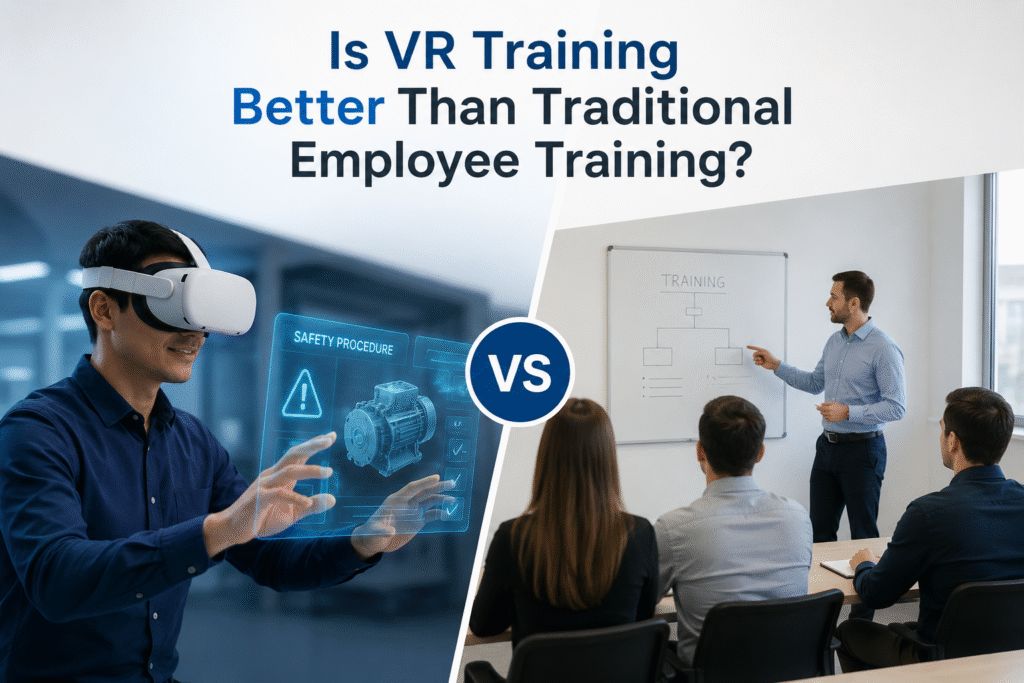
VR Training vs. Traditional Training: Key Differences
Every corporate leader wants the same thing. You want your workforce to learn quickly, make fewer mistakes, and stay safe on the job.
For decades, companies have used traditional training methods like classroom lectures, PowerPoint slides, and thick training manuals. But today, technology is changing the game.
At Fore Excel, we help businesses implement next-level immersive technology. Let’s look at why Virtual Reality (VR) training is quickly replacing traditional employee training across India and the globe.
What is Traditional Training?
Traditional training relies on passive learning. Employees sit in a classroom, watch a presentation, or read a handbook. While it works for sharing basic company policies, it struggles with hands-on skill development.
The Problems with Traditional Training:
- Low retention: People forget up to 70% of what they read or hear within 24 hours.
- High costs: Travel, venue bookings, and hiring trainers cost a lot of money.
- Safety risks: You cannot safely practice factory fires or heavy machine failures in a real classroom.
What is VR Training?
VR training puts employees inside a 360-degree digital world using a VR headset. Instead of looking at a picture of a machine, they stand right in front of a virtual version of it. They can pull levers, fix parts, and practice tasks with their own hands.
Why VR Training is Better: A Quick Comparison
| Feature | Traditional Training | VR Training |
| Learning Style | Passive (Reading & Watching) | Active (Learning by Doing) |
| Retention Rate | Low (Around 10% to 20%) | High (Up to 75% to 80%) |
| Speed | Slow (Takes hours or days) | Fast (Up to 4 times quicker) |
| Safety | High risk for dangerous jobs | 100% Safe virtual world |
| Mistakes | Costly and dangerous in real life | Free and safe to make errors |
The Big Benefits of VR Training
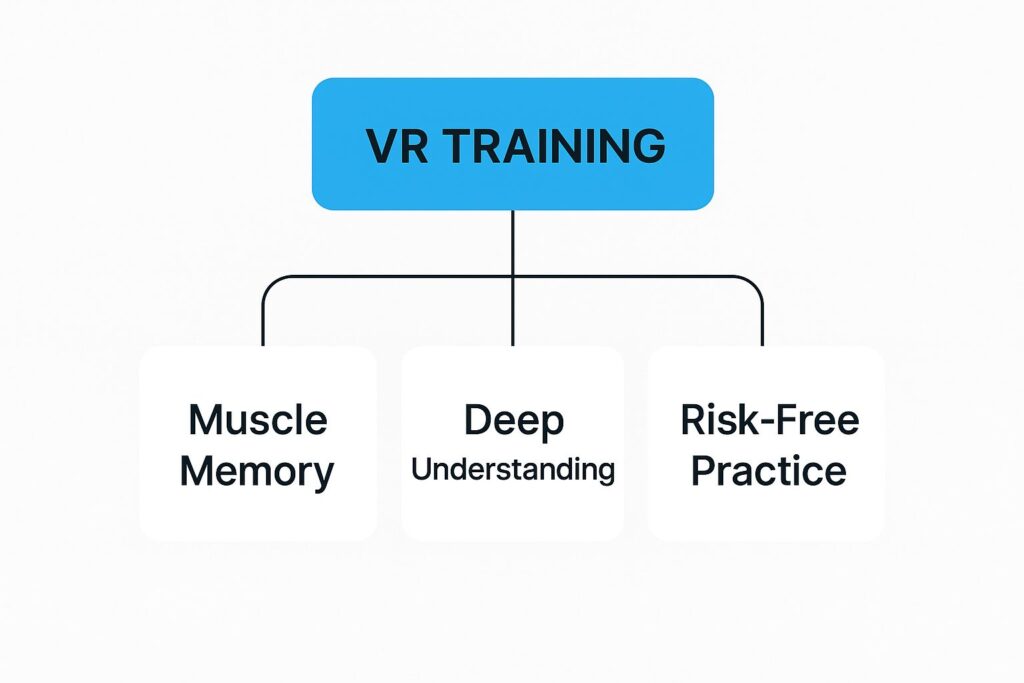
1. Hands-on Practice Without the Risk
In sectors like aviation, manufacturing, or defense, mistakes cost lives. VR lets employees practice dangerous tasks safely. If a worker makes a mistake in VR, they simply restart the software module without hurting themselves or damaging expensive tools.
2. Much Faster Learning
Because VR blocks out distractions, employees stay completely focused. Studies show that VR learners finish training up to four times faster than classroom learners. What used to take two hours in a classroom might take just 30 minutes in VR.
3. Better Memory Retention
We remember things better when we actually do them. VR mimics real life so closely that the brain treats the experience as a real event. This boosts muscle memory and confidence when employees step onto the actual work floor.
4. Saves Money Long-Term
Traditional training has recurring costs like travel, printing, and trainers. With VR, you buy the headsets once and use the software for thousands of employees over time. It eliminates travel and reduces downtime on your real factory floor.
Ready to Upgrade Your Training?
The verdict is clear. Traditional training is useful for basic concepts, but VR training is better for building real-world skills, safety, and speed.
At Fore Excel, we offer complete hardware distribution and enterprise SaaS software solutions for safety, industrial, and workforce training. We partner with top platforms like Immersive Factory and NextWorld XR to build custom solutions for your business.
Do you want to see a live demo of how VR can work for your industry?
- Drop us an email at support@foreexcel.com
- Call us for assistance at +91 8048619830